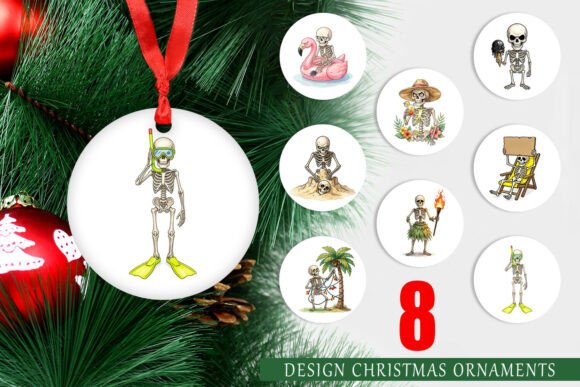
Review: Watercolor Summer Skeleton Ornament PNG
When I first pulled up the Watercolor Summer Skeleton Ornament PNG on my screen, I didn’t see just another clipart file. I saw a specific challenge and an opportunity for texture. As designers who bridge the gap between digital assets and physical thread, we know that what looks crisp on a monitor can sometimes turn into a muddy mess under the needle. This particular piece, categorized under Illustrations, carries a whimsical yet slightly edgy vibe that is increasingly popular in modern boutique branding. But does it translate well to fabric? Let’s break down how this design performs in real-world embroidery scenarios.
First Impressions and Visual Personality
The immediate mood of the Watercolor Summer Skeleton Ornament PNG is playful with a touch of surrealism. The watercolor aesthetic implies soft edges, bleeding colors, and a lack of hard boundaries. For a digital printer, this is easy. For an embroiderer, it is a puzzle. The skeleton motif suggests Halloween or Day of the Dead themes, but the "summer" descriptor and bright, washed-out tones push it toward year-round quirky decor or summer festival apparel.
The layout is compact, which is good for placement versatility, but the detail level raises questions about stitch density. Watercolor effects rely on gradients. In embroidery, gradients are achieved through thread blending or dense fill stitches. If this design is intended to be converted into a machine embroidery design, the artist must have carefully mapped out how those soft transitions become tangible threads. Without proper digitizing, the delicate bones could get lost in a sea of satin or fill stitches.
Real-World Application: The Custom Tote Test
To evaluate this properly, I imagined using this asset for a custom order: a canvas tote bag for a local indie bookstore’s summer reading club. The client wanted something eye-catching but not overly spooky. The Watercolor Summer Skeleton Ornament PNG fit the brief perfectly in terms of theme. However, the execution required careful planning.
For a tote bag, durability is key. A simple running stitch outline would not capture the watercolor feel; it would look too sketchy. Instead, this design demands a combination of techniques. The bones might need a tight satin stitch to maintain definition, while the surrounding "watercolor" splashes would require a low-density fill stitch to mimic the wash effect without creating a stiff, cardboard-like patch on the fabric. If you are an Etsy seller or run a small shop product line, understanding this balance is crucial for customer satisfaction. A stiff design on a soft canvas tote feels cheap; a well-digitized one feels premium.
Fabric and Stabilizer Considerations
One of the biggest risks with watercolor-style graphics is the background. If the Watercolor Summer Skeleton Ornament PNG includes a white or light-colored background to simulate paper, you cannot simply stitch over dark fabric. You must consider using an applique design technique. By cutting a piece of light fabric to match the shape and stitching the skeleton on top, you preserve the integrity of the colors and prevent the dark garment from showing through. This adds a layer of complexity but significantly boosts the professional look of the finished product.
Stabilizer choice is equally critical. For stretchy fabrics like t-shirts or sweatshirts, a cut-away stabilizer is non-negotiable to prevent puckering around the dense areas of the skeleton. For woven fabrics like aprons or pillow covers, a tear-away might suffice, but only if the stitch density is moderate. Always test on scrap fabric first. I recommend stitching a small section of the design to check if the thread colors blend well or if they create unintended optical mixing from a distance.
Where to Use It—and Where to Pause
This design shines in specific contexts. It is ideal for:
- Sweatshirt embroidery: The thick fabric supports the weight of the stitches, and the whimsical theme appeals to the current trend of eclectic, personalized streetwear.
- Embroidered patches: Creating a standalone patch allows you to use heavy stabilizer and dense stitching without worrying about garment distortion. This is a great option for craft business owners looking to create inventory ahead of time.
- Nursery decor: If the colors are pastel enough, this could work for a quirky baby room, provided the bones are stylized and friendly rather than anatomical.
However, exercise caution with:
- Small hoop sizes: If you shrink this design too much, the intricate details of the skeleton will merge. The watercolor splashes may become indistinguishable blobs. Check the minimum recommended size before purchasing or digitizing.
- Curved surfaces: Stitching this on a cap is risky. The curvature can distort the symmetrical elements of the skeleton. If you must do it, use a strong backing and consider simplifying the design.
- Thin or sheer fabrics: The density required to replicate watercolor textures can pull and pucker lightweight materials like silk or rayon. Avoid using this on delicate garments unless you are an advanced digitizer.
Commercial Value and Brand Consistency
For commercial embroidery projects, consistency is king. If you are selling this as part of a collection, ensure that the Watercolor Summer Skeleton Ornament PNG aligns with your brand’s aesthetic. Does your shop lean towards rustic, modern, or bohemian? This design fits best in modern-boho or eclectic niches. Using it in a traditional or minimalist brand context might confuse your audience.
From a buyer’s perspective, unique designs build trust. A generic skeleton is everywhere. A watercolor-style skeleton suggests artistic intent and higher value. When customers see thoughtful color blending and clean stitching, they perceive the handmade product as worth the higher price point. This is especially true for personalized gifts where the recipient expects a one-of-a-kind item.
Practical Designer Notes
Before you commit to a large production run or list this on your store, keep these technical checks in mind:
First, verify the license. Just because it is a digital embroidery file or a PNG reference does not mean it is free for commercial use. Confirm whether you are buying the right to sell the physical embroidered item or if you need an extended license for high-volume sales. Many design assets have restrictions on digital resale, meaning you cannot sell the file itself, only the finished physical good.
Second, mockup testing is essential. Create black and white versions of the design to check contrast. If the skeleton disappears against a mid-tone gray in a monochrome mockup, it will likely lack definition when stitched with similar thread values. Adjust your thread colors to ensure high contrast between the bones and the background splashes.
Finally, consider the hoop size relative to the garment. A large design on a small baby onesie will be uncomfortable. Scale appropriately. For baby embroidery, you might need to simplify the watercolor background to reduce scratchiness against sensitive skin.
In conclusion, the Watercolor Summer Skeleton Ornament PNG is a versatile asset for the right project. It offers a fresh take on a classic motif, bridging the gap between digital art and tactile craft. With careful attention to digitizing, stabilizer selection, and fabric choice, it can elevate your custom apparel and holiday embroidery offerings. Treat it not just as an image, but as a blueprint for texture, and your customers will feel the difference in every stitch.